Grand Canyon

The Grand Canyon is a massive geological feature in the US state of Arizona. Due to efforts of conservationists, the region became a Forest Preserve in 1893 and was protected from unrestricted hunting and logging. Later, because of its popularity, the region was made into Grand Canyon National Park. The park covers over 1.2 million acres of land[1], and hosts nearly 5 million visitors annually.[2].
The formation of the Grand Canyon is a problem for uniformitarian geologists, but fits well into the framework of the Biblical global flood. Exposed within walls of the Grand Canyon are rocks that were likely created during the creation, along with massive layers resulting from sedimentation during the flood. Flood geologists such as Steven Austin assert that during the last half of the year of the flood, the Colorado Plateau was lifted by tectonic forces more than a mile above sea level. This uplift then formed a dam, which blocked river drainage and caused one or more lakes to build behind the dam until it was breached. The erosion of the massive canyon system was probably driven by landslides and high-speed waters carrying gravels and other sediments during the catastrophic lake drainage.[3]
Strata Deposition

- Main Article: Strata
Some of the most outstanding features of the Grand Canyon are the layers of sedimentary rock called strata that have been exposed by the erosion event that carved this immense canyon system. Layers of sedimentary rocks hundreds of feet thick blanket the world, and can be traced across entire continents and even correlated with layers on other continents. By comparing the sequence of layers from various areas, the cross section of strata known as the geological column was developed.
The strata seen in the photo at right were formed during the flood of Noah via hydrologic sorting. Due to continuous recent erosion, we are now able to see the layers formed during the flood.
| “ | The crystalline-basement rocks exposed deep within the Canyon (schist, granite, and gneiss) represent some of earth's oldest rocks, probably from early in Creation Week. Tilted, deeply buried strata (the "Grand Canyon Supergroup") show evidence of catastrophic-marine sedimentation and tectonics associated with the formation of an ocean basin midway through Creation Week, and may include ocean deposits from the post-Creation, but pre-Flood world. The Canyon's characteristic horizontally stratified layers (the "Paleozoic Strata") are up to 4,000 feet thick [1,200 metres] and are understood to be broad sedimentary deposits in northern Arizona dating from the early part of Noah's Flood. Remnants of strata overlying the rim of Grand Canyon (the "Mesozoic Strata") are associated with a widespread erosion surface.[4] | ” |
Erosion
The Grand Canyon provides a tremendous example of the results of large-scale erosion, which is important in developing an understanding of the mechanisms likely to have been active in the Biblical global flood. For many years creation scientists have taught that the Grand Canyon was formed rapidly when a large lake on the northern border of the Colorado Plateau broke through its natural dam. In contrast, secular science has taught that the Colorado river eroded the canyon gradually over millions of years based on the uniformitarian assumptions. However, researchers have recently determined that the Grand Canyon is a geologic infant in comparison to previous estimates, and it has been concluded that indeed much of the canyon was eroded rapidly as a result of dam failure.[5] [6] [7]
Research by the U.S. Geological Survey has revealed that "Geomorphic change in Grand Canyon is largely catastrophic in nature, especially on a decadal time scale, and changes to debris fans resulting from debris flows are usually obvious."[8]
| Replicate photographs of the debris fan at South Canyon (river mile 32.5-R). | |

|

|
| A. Photograph taken on July 17, 1889 by Franklin A. Nims. | B. Replicate view taken on January 2, 1992 by Jim Hasbargen. Several debris flows have aggraded the debris fan, including a large one that deposited the prominent levee at right between 1940 and 1965. |
Notable Features
The Kaibab Limestone
The highest stratum at the Grand Canyon is the Kaibab limestone.[9] Among the marine fossils found here are sea lilies, which are restricted to fairly deep waters, about 60m to 300m deep. This implies that at one time the Kaibab Plateau was beneath at least 60m of water.
Kanab Canyon
Kanab Canyon is one of the larger side canyons of the Grand Canyon, running north in the direction of Fredonia, Arizona. Its mouth (36.393o N, 112.630o W) intersects the Grand Canyon about 144 miles below Lees Ferry, Arizona and 60 miles below Grand Canyon Village. Its importance for creation science studies is the evidence it provides for high discharge rates in its formation that correlates well with postulated late Flood conditions. Post-Flood lakes on the Colorado plateau may have breached to cause episodes of high discharge water. Some have suggested the hypothetical "Lake Flagstaff" in Utah which may have deposited the "Pink Cliffs" Formation (Wasatch Formation), as an example of lake formation. Others critique the idea of a lake on the Colorado Plateau in the past.
Shiva Temple
Shiva Temple is a butte or mesa about one mile long (1.6 kilometers) with an area of about 300 acres in the canyon near the North Rim (36.166o N, 112.160o W). Its top is about the same altitude as the North Rim, but is separated by a saddle that descends more than a thousand feet to the level of desert plants. Shiva Temple is of interest to creationists because in 1937, Harold Anthony of the American Museum of Natural History led an expedition to Shiva Temple to show that it had been separated from the rim of the canyon so long that its animals had developed new evolutionary distinctions. He concluded that there was not enough evidence to support the hypothesis, and decided the top of Shiva Temple was not as isolated as he had thought.
John Meyer and George Howe studied the mammals on Shiva Temple in 1979 [10], and noted that there are some mammals who live in the ponderosa pine forests both on the North Rim and on Shiva Temple who don't live on the saddle between the two. This would seem to be evidence of the isolation of Shiva Temple at least for some species of small animals. The Kaibab squirrel (Sciurus aberti kaibabensis) is found on the North Rim, but not on Shiva. The Brush Mouse (Peromyscus boylii), the Bushytailed Wood Rat (Neotoma cinerea), and the Canyon Mouse (Peromyscus crinitus) are found both on Shiva and on the North Rim but not on the saddle between the two which has a desert type of plant life. Meyer and Howe point out that for at least some small mammals, there is evidence of isolation, but no evidence of evolutionary differences showing up. They point out that short term isolation of the animals points to a recent formation of the canyon, while long term isolation points to a failure in evolutionary processes that should occur in an isolated population.
Radiometric Dating
- Radiohalos found in coalified wood at the Colorado Plateau have a high 238U/206Pb ratio, ranging from 2000 to 27000. This suggests that the Colorado Plateau was formed several thousand years ago, and not hundreds of million of years ago. [11]
- Debris flow terraces have yielded radiocarbon dates of less than several thousand years. [12] This is due to continuous erosion after the flood, forming the Canyon.
Political controversy
Bible Verse Plaques
In the 1960's, a convent known as Canaan in the Desert, part of the Germany-based Protestant group Evangelical Sisterhood of Mary, donated three fiberglass and bronze plaques containing Bible verses to the Grand Canyon National Park.[13] The plaques contained the following verses:
"All the earth bows down to you; they sing praise to you, they sing praise to your name." Psalms 66:4 (NIV)
"Sing to God, sing praise to his name, extol him who rides on the clouds — his name is the LORD — and rejoice before him." Psalms 68:4 (NIV)
"O Lord, how manifold are thy works! in wisdom hast thou made them all: the earth is full of thy riches." Psalms 104:24 (KJV)
The plaques were displayed at three sites around the canyon's south rim: Hermit's Rest, Lookout Studio and Desert View.
In July 2003, the American Civil Liberties Union submitted a letter expressing their concern over plaques containing passages of Scripture. Following the complaints, the signs were removed by the Grand Canyon Park Superintendent Joe Alston to avoid controversy.[14]Many letters of protest were sent in, in an effort begun by a Los Angeles talk show host.[15]
Department of the Interior spokesman David Barna pointed out that various other religious icons were displayed throughout national parks, such as a Russian Orthodox chapel in the Sitka National Historical Park, a Spanish mission in San Antonio, an Indian site in Wyoming, and a chapel in Yosemite National Park.[15]
On July 23, just a few weeks after being removed, Deputy Director Donald Murphy ordered that the plaques be returned until the policy was reviewed. The Deputy Director also wrote a letter to the Sisterhood, apologizing.[16] No further action has been taken towards removal.
Creationist Book
Other complaints were brought to light over a photo essay book Grand Canyon: A Different View by creationist Tom Vail featured in a bookstore of the Grand Canyon National Park. Several creation scientists contributed information to the book, which offers the creationist perspective that the Grand Canyon is not millions of years old. On December 16, 2003, presidents of seven scientific organizations sent a letter urging the Park Service to remove the book, stating that it was not a work of science, but of religious belief, and that its presence in the shop could be interpreted as endorsement. If not removed, the letter suggested, it should at least be separated from other scientific books.[17] The book is now sold in the "Inspirational" section of the store.
According to Vail's attorney, Gary McCaleb, public record requests revealed that the letter was actually edited by employees within the Park Service itself.[18]
In January of 2004, National Park Service Chief of Public Affairs David Barna said that they would review whether or not the book should remain. A group known as Public Employees for Environmental Responsibility (PEER) challenged the claim, suggesting no such review had taken place.[19]
The letter sparked a controversy, fueled by Answers in Genesis urging its supporters to express their opinions on keeping the book in the Park store. Thousands of e-mails poured into the Park Service.[20]
Although the National Park Service denied teaching or endorsing a creationist view, they maintained that the book would remain in the park's store.[21]
Alleged political pressure to adopt YEC time line
In 2006, PEER issued another release [22] in which it was asserted that "Grand Canyon National Park is not permitted to give an official estimate of the geologic age of its principal feature, due to pressure from Bush administration appointees." The press release was published and highlighted by eSkeptic, an online publication of skeptics and agnostics.[23] The next week, eSkeptic followed up,,[24] revealing that dozens of eSkeptic readers phoned the National Park Service and the Grand Canyon National Park, and were informed that the claims of PEER were utterly false. The article quoted various Grand Canyon park employees stating the claims of being pressured to remain neutral on the age of the canyon were untrue.
After pursuing leads and questioning the head of PEER and finding no evidence to back up their claims, eSkeptic publisher Michael Shermer concluded that "PEER is an anti-Bush, anti-religion liberal activist watchdog group in search of demons to exorcise and dragons to slay."[24]
Creation Resources

Books
- Grand Canyon: Monument to Catastrophe by Steven Austin. This book serves as a creationist guidebook to the Grand Canyon and the Colorado Plateau.
- Grand Canyon: A Different View book compiled by Colorado River guide Tom Vail.
- Over the Edge book by Larry Vardiman
- Your Guide to the Grand Canyon by Tom Vail, Mike Oard, John Hergenrather, & Dennis Bokovoy
Videos
- Grand Canyon: Monument to the Flood Documentary by the Institute for Creation Research
- The Grand Canyon Catastrophe: New Evidence of the Genesis Flood Documentary by Keziah and American Portrait Films
- Geologic Evidences For Very Rapid Strata Formation In The Grand Canyon seminar by Steven Austin
- Enjoy the Ride seminar by Carl Kerby
Tours
There are several creation science organizations that offer regular tours to and rafting trips through the Grand Canyon with instructors who can illustrate the relevance of the monument for creation geologists.
Gallery

Unidentified scorpion at the Grand Canyon
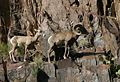
Bighorn sheep (Ovis canadensis) at the Grand Canyon
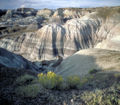
Colorado plateau


References
- ↑ Frequently Asked Questions: How big is it? by the U.S. National Park Service
- ↑ Frequently Asked Questions: When and why did Grand Canyon become a National Park? by the U.S. National Park Service
- ↑ Grand Canyon: Monument to the world-wide Flood Creation 18(2):28 March 1996
- ↑ Austin, Grand Canyon: Monument to Catastrophe, pp. 80-81.
- ↑ Grand Canyon; Grand and Young by Stephen Cox. University of Arizona. Winter 2003, (Link dead Nov 2008)
- ↑ Grand Canyon is a geologic infant NewsWise July 19, 2002, link verified 28 Nov 2008
- ↑ The Making of a Grand Canyon by Sid Perkins. Science News, September 30, 2000; Vol. 158, No. 14, (Link dead Nov 2008)
- ↑ Initiation and Frequency of Debris Flows in Grand Canyon, Arizona U.S. GEOLOGICAL SURVEY Open-File Report 96—491
- ↑ Grand Canyon Rock Layers, at Grand Canyon Explorer, by Bob Ribokas
- ↑ The Biological Isolation of Shiva Temple, by John R. Meyer and George F. Howe, Creation Research Society Quarterly Journal, Volume 24, Number 4, March, 1988
- ↑ Radiohalos in Coalified Wood: New Evidence Relating to the Time of Uranium Introduction and Coalification, by Robert V. Gentry, Warner H. Christie, David H. Smith, J. F. Emery S. A. Reynolds, Raymond Walker, S. S. Cristy and P. A. Gentry, SCIENCE, 15 October 1976, Volume 194, pp. 315-318, reprint hosted by Earth Science Associates
- ↑ Succession of desert plants on debris flow terraces, Grand Canyon, Arizona, U.S.A., by Janice E. Bowers, Robert H. Webb & Elizabeth A. Pierson, U.S. Geological Survey, Journal of Arid Environments (1997) 36: 67–86
- ↑ Scripture yanked from Grand Canyon; Interior sides with ACLU, calls 30-year-old plaques unconstitutional, July 14, 2003, WorldNetDaily
- ↑ AP: Plaques with Biblical Psalms Removed from Grand Canyon (Arizona), Sierra Times, July 14, 2003 (dead link), Plaques with Biblical Psalms Removed from Grand Canyon (Arizona), AP article, July 14, 2003
- ↑ 15.0 15.1 Grand Canyon a praiseworthy natural setting in God debate, The Washington Times, August 31, 2003
- ↑ How Grand Canyon Shows God's Existence, By David Brody, CBN News
- ↑ Letter from seven scientists, December 16, 2003, hosted by Public Employees for Environmental Responsibility (PEER)
- ↑ Shenanigans recently uncovered in Grand Canyon book controversy, by Mark Looy, AiG–USA, December 14, 2004
- ↑ Feds OK'd biblical Grand Canyon book? Special-interest group claims resource approved, Park Service denies it, By Ron Strom, WorldNetDaily, October 19, 2004
- ↑ E-mails on creation flap 'swamp' Park Service; Thousands flow into agency amid controversy about Grand Canyon book, By Ron Strom, WorldNetDaily, January 14, 2004
- ↑ National Park Service Now Distancing Itself from Creationist Book It Approved; Evolving Grand Canyon Position Leaves Unanswered Questions, PEER news release, hosted by YubaNet.com, Jan 16, 2007
- ↑ How Old is the Grand Canyon? Park Service Won't Say, PEER news release, hosted by YubaNet.com, Dec 28, 2006
- ↑ Creationism in Our National Parks, by Donald Prothero, eSkeptic, January 10th, 2007
- ↑ 24.0 24.1 Fact Checking 101: How Skeptic magazine was Duped by an Environmental Activist Group, by Michael Shermer, eSkeptic, January 17th, 2007
See Also
External links
Creationist
- Comments on the breached dam theory for the formation of the Grand Canyon by Michael Oard. CRSQ 30(1):39-46. June 1993.
- Excessively Old "Ages" For Grand Canyon Lava Flows by Steven A. Austin. Institute for Creation Research, Impact #224. February, 1992.
- The Grand Canyon and the Age of the Earth by Dr. Ray Bohlin
- The Grand Canyon: Evidence for the Flood by Paul Garner (Online Video)
- Grand Canyon Lava Flows: A Survey of Isotope Dating Methods by Steven Austin. ICR IMPACT No. 178 April 1988
- Grand Canyon: Monument to the world-wide Flood Creation 18(2):28 March 1996
- Kanab Canyon, Utah and Arizona: Origin Speculations by Emmett Williams, Robert Goette and John Meyer. CRSQ 34(3):162-172. December 1997.
- Radioisotope Dating of Grand Canyon Rocks: Another Devastating Failure for Long-Age Geology by Andrew Snelling.
- Remove God from the Grand Canyon? by Michael Matthews, AiG–US. 28 July 2003
- Were Grand Canyon Limestones Deposited by Calm and Placid Seas? by Steven A. Austin. Institute for Creation Research. December, 1990.
- Who Knows the Age of Grand Canyon? by Creation-Evolution Headlines

Secular
- Grand Canyon National Park website
- Photo Gallery by the U.S. National Park Service (public domain photos).
| ||||||||||||||||||||


| ||||||||||||||||||||

