Bird
| Birds |
|---|

|
| Scientific Classification |
|
| Orders |
|
| Birds |

|
Birds are any of the species of vertebrates that belong to the taxonomic class Aves. Birds make up the largest group of vertebrates with the exception of fish. They are also the most spoken of animal in the Bible with over 35 individuals mentioned.(Porch, p551) Birds are found on every continent, in almost every environment, and in a dazzling array of sizes, shapes and colors.[1] They truly illustrate the marvelous ingenuity of the creator God.
People have been fascinated with birds since the beginning of time. There have been countless myths and stories based on birds. They are very easy to identify because of their unique characteristics. Unlike any other animal, birds are covered in feathers. Another unique ability possessed by most birds is the ability to fly. A not so obvious, but no less unique characteristic of birds is their hollow skeleton which enables them to fly. Birds have been used as food, for sacrifices, as national symbols, pets and for hunting for hundreds of years and still are today.(Porch, p543)
The IOC World Bird List at present (Ver. 3.2) shows 10,466 species of birds in 40 Orders. The 2256 Genera are found in the 231 Families (plus 6 Incertae sedis).
Anatomy

Feathers
All birds have certain characteristics that promote their ability to fly; even birds that do not fly through the air share these characteristics. Feathers are one of those characteristics. Having many functions, feathers, in addition to allowing flight can serve as an insulator (a much needed characteristic to any endotherm), also a cushion to protect the bird’s fragile skeleton, its colors can be used for camouflage or even for attracting a mate. The strong, flexible, yet practically weightless feather consists of a vane, rachis and quill. A feather grows from a tiny structure on the skin called a papilla. The quill is the hollow part that grows from the papilla; the rachis connects to the vane. The vane is made up of rows of barbs originating from the rachis, parallel to the rachis rows of barbules come off each barb, they interlock using many microscopic hooks. To prevent their feathers from becoming brittle and breaking many birds will oil them. The oil is secreted from a gland at the base of the tail and during preening the bird applies oils to all its feathers. Oil is essential to a bird because without it birds would have a hard time flying, keeping warm or swimming when wet.(Porch, p545)
There are two basic types of feathers: down feathers and contour feathers. Down feathers do not have interlocking barbules but serve as an underlayer providing insulation and a cushion. Contour feathers cover the outside of the bird’s body giving it its color and shape. Flight feathers are also contour feathers. Fully developed feathers, like scales, are dead and much like scales must be shed and periodically replaced. The molting process is very orderly and gradual so as to not hamper a bird’s flight. The main exception to this rule are the water fowl which use swimming as their primary method of locomotion. Many birds molt in the summer so that the new feathers are ready for their yearly migration. Others shed before mating so the new feathers are more attractive to a mate.(Porch, p545)
Appendages
Most birds use their wings to propel themselves through the air, though some such as the penguin use them to propel themselves through water. There are four main types of wings; elliptical, high-speed, soaring, and high-lift. Elliptical wings are short and wide designed for quick takeoffs and landings. They are also ideal for low speed flight and very good maneuverability. Woodpeckers possesses these wings which are important for the quick direction changes inherent in forest living. High-speed wings have a long, thin and tapered shape to prevent drag. Terns have these wings and are among the fastest birds. Soaring wings are long, thin, glider-like wings. They allow a minimum of energy to be expended staying up in the sky, but sacrifice maneuverability. Sea gulls possess this type of wing and can cover long distances over water with little effort. High-lift wings are large and convex providing an incredible amount of lift. They also allow birds of prey such as the eagle to carry large prey with less effort. Birds that have these wings are very good at soaring, riding thermal air currents and changing their course with slight adjustments.(Porch, p546)
Birds also use their flexible necks and bills as arms and hands. Another important appendage of birds is their legs and feet. Birds' feet are located on the ventral surface of their bodies, are usually thin and covered with scales having three to four clawed toes. There are six main types of birds’ feet; wading, swimming, climbing, running, grasping, and perching. Wading feet have long, thin, widely spread toes to distribute the bird’s weight evenly, preventing it from sinking into the muddy river or stream bed. They also create little drag and current which scares away the bird’s prey. Swimming feet usually have three toes with webbing in between. Climbing feet consist of two in front and two in the back providing good grip and balance when climbing on vertical or upside down surfaces. Running feet are possessed by many flightless birds and are long, heavily muscled legs with thick toes that work like hooves. Grasping feet are designed to grab, kill, and maintain grip on the bird’s prey. Each of the four toes is tipped with a sharp, curved talon and has spiked scales underneath for maintaining a positive grip on the prey. Perching feet are possessed by most songbirds and consist of three toes in the front and one in the back. These types of feet have a sort of “locking device” which helps keep a bird on a branch even when it is sleeping.(Porch, p546)
Support

Unlike any other kind of animal, birds are supported by bones that are filled with numerous air filled cavities with internal supports. This characteristic does not make the bones weak, but does give the birds the lightness that allows it to attain flight. There are several other features that make a bird’s skeleton unique. For example, the upper and lower jaw elongates to form a bird’s bill. The neck vertebrae allows free movement of the head—a much needed characteristic for birds that don’t have forelimbs. Also, the vertebrae move freely which allow the tail feathers to be moved very precisely. The ribs and sternum are fused creating a rigid structure; the sternum is fused to the keel providing an attachment point for the flight muscles. A final characteristic is the enlarged and fused clavicles forming the wish bone which is also a connection point for flight muscles.(Porch, p547)
Digestion
Due to a high energy lifestyle resulting from a bird’s ability to fly, they must take in a lot of food to stay alive. Birds have a unique food gathering structure called a bill. The four main types of bills are; tearing, probing, cracking and filtering. Tearing is for ripping apart prey, probing is for getting insects in small cracks or spearing fish, cracking is for splitting seeds, and filtering is for separating food from dirt. Some birds can eat a quarter of their weight in food a day. Since a bird can not afford to carry around extra weight that could hamper their flight rapid digestion is essential.(Porch, p548)
Following a piece of food through a bird’s digestive system, it would go something like this. Digestion begins when food passes down an elastic, tube-like structure called the esophagus to the crop. It is temporarily stored in the enlarged part of the esophagus called the crop until being passed down to the two-part stomach. The stomach consists of the proventriculus (the part that provides the digestive juices) and the gizzard (a sack filled with sand and small rocks that with muscular contractions grinds the food with the digestive juices). After passing through the stomach the food will enter the intestine where the final digestion and absorption occurs. Any undigested matter is passed out of the common opening for the intestine, the kidney ducts and reproductive organs or the cloaca.(Porch, p548)
Respiration
Birds, in addition to needing a lot of food, also need a lot of oxygen. Their inelastic lungs do not provide enough oxygen and are compensated for by a system of air sacs. 25% of air enters the gas exchange area of the lungs the remaining 75% enters the air sacs. When a bird exhales air from the air sacs enters the lungs thus always providing air for the bird, even when exhaling. The air sacs also help with flight by taking up the area that fluids and fat takes up in other animals making the bird lighter. A bird’s respiration is not only to attain air; it also helps a bird stay cool much like panting in dogs. Birds also use respiration to vocalize.(Porch, p548)
Songs are produced by the syrinx or song box which is an enlarged part of the trachea above where it goes into the lungs. A complex arrangement of muscles makes different sounds. This is one proof that music is not man's creation, but is God's-He who delights in giving song to his creatures also takes delight in hearing His glories declared in their song (Psalms 33:3). Some species of birds only have only a few songs while others can imitate songs of other birds. Talking birds not only use the syrinx, but also the trachea, tongue, bill and even esophagus. Few birds actually understand what they are saying and are just mimicking for a treat, though some highly trained birds can put together words as well as understand them.(Porch, p549)
Circulation/Excretion
The bird’scirculatory system has a complete separation of oxygenated blood from deoxygenated blood, a characteristic helped by a four chambered heart (this characteristic is also found in mammals). The right side of the heart receives deoxygenated blood from the body and pumps it to the lungs where it is then provided with oxygen. Once the blood is oxygenated it passes through the left side of the heart and then into the body. Comparatively birds have the largest hearts of all vertebrates. Though their hearts may be comparatively large their beats per minute range from 135 to 570 and in some birds it may be as many as 1000. It is said that birds burn themselves out (resulting in death)-this is true in a way, because their hearts beat so fast that in times of extreme stress they die of heart failure. Metabolic wastes are filtered by two kidneys located along the back of the body cavity. The kidneys empty the waste into the cloaca where it is then disposed of. Birds do not posses a bladder to store urine, nor do they store other wastes-this results in the need for frequent emptying. To reduce weight the cloaca is emptied before flight and at other frequent intervals.(Porch, p549)
Response
A design by God becomes more evident when it comes to the bird’s brain. Birds have good senses to match their environment and activities. Birds need to have good sight in order to spot food from the air and to avoid obstacles in their path. Birds need hearing to find a mate and some nocturnal birds use it to catch prey in the dark. Thus God gave birds the best sight of all animals and they have some of the best hearing as well. Birds eyes are large and set deep in the skull, due to the fact that they are usually immovable. This is compensated for by the bird’s flexible neck, allowing a wide field of view. A bird’s eyes are positioned on each side of its head-this helps the field of view. Due to the light receptors in the retina being packed two to five times as closely as humans a hawk can spot a crouching rabbit up to one mile away. Also, an owl can spot prey in 1/10 to 1/100 of the light required by humans.(Porch, p550)
The ear canals of a bird open behind the eyes and are usually covered by feathers. The canals lead to complex sensory mechanism inside of the skull. Their hearing is sensitive in the upper range of sound where most bird calls are made. Another part of the brain is the olfactory lobes which are small because the sense of smell is not very important, except in carrion birds. The cerebrum is large to accommodate for a bird’s complex behavior and instincts. The optic lobe is also large-the reason for a bird’s good sight. The muscle control center or cerebellum is large to accommodate the complicated and precise movements as well as the complicated combinations of muscle movements.(Porch, p550)
Reproduction

For birds the process of reproducing and raising young is very complicated, it may involve nest making, courtship, signing or all three just to attract a mate. Courtship is basically the male’s attempt to attract a mate. Most will try to attract the female’s eye with bright colors or, most commonly used, by singing. Birds are oviparous (they produce eggs outside of the body) producing amniotic eggs.(Porch, p553) The male’s reproductive organs consists of a pair oftestes that produce sperm. The female reproductive organs is an ovary which produces an ova that is then transported to the cloaca. Fertilization occurs inside the oviduct where the egg is formed.[2]
The egg is mostly yolk and serves as food for the developing embryo. The yolk is then coated with a protein containing substance called albumen or egg white. The yolk with is attached embryo is suspended in the center of the egg shell by thick spiral fibers of the albumen called chalazae. The entire thing is then covered in a shell by special glands in the oviduct.(Porch, p553) Egg shells are made up of about 95% calcium carbonate and stabilized by a protein matrix.[3] Bird's eggs come in a wide variety of colors, from plain white to blue with spots. The size of eggs between types of birds is also very diverse. For example, a humming bird’s egg is the size of a pea but an ostrich’s egg is big enough to put 4,700 humming bird eggs in it. (Porch, p553)
Nests are made by birds as a nursery for their young and are as diverse as the birds that make them. The burrowing owl uses a burrow of a squirrel or prairie dog, the flamingo nests on the ground in a nest made of mud while the grebe builds a floating raft nest. The male emperor penguin actually uses its feet as a nest for the egg, and later the baby, until the mother returns from feeding. The main job of a nest is to protect the young from predators as well as the harsh elements. These incredible structures are made by an animal that only uses its feet and bill.(Porch, p553)
Most bird’s eggs must be incubated or kept warm in order for the embryo to properly develop. This is usually taken care of by the parent sitting on the egg. The chick that emerges from the egg falls into one of the two categories: altricial or precocial. Altricial chicks usually hatch less than two weeks after the egg was laid, and emerge naked, blind and helpless. These chicks must be taken care of by the parent to ensure survival. Precocial chicks have incubation periods up to a month and emerge from the egg covered in down and well developed. Their nests are usually found on the ground and most often in families of fifteen to twenty.(Porch, p554)
Ecology
Birds live on every continent and in almost every environment, from the freezing South Pole to the extremely hot equator. Within their environment birds deal with three main factors; competitors, vegetation structure and trophic levels. Vegetation structure best determines avian diversity. Competitors can be either other birds of that same species or a different species competing for food or a place to live. Since no two species can occupy the same niche the competition can be fierce at times. There tends to be more species in the tropics because of the fact that there are more and larger arthropods in the tropical forests than in temperate zones providing a better food source. Territorial behavior is typically found among song birds, but can also be found in a few other orders. A territory is an area that a bird or group of birds defends against others of a different or their own species for a period of time. Territories serve six main purposes: to provide nest sites, pair formation facilitation, reduce disease, as well as predation, reduce aggression, stability of resources, and population control. It provides a place to nest and rear young. The male can attract a mate based on the quality of its territory or pair formation facilitation. The reduction in disease and predation is more of an effect. Once the territories are established there is a reduction in aggression due to the fact that there is less competition. There is also a stability of resources because they are in the territory and are more predictable. Population control is also more of an effect; the resources are not depleted by everyone.[4] Birds have also been affected by, and have affected humans since the beginning. Birds have been a source of food for humans as well as pets for humans since creation. Birds have also been the carriers for diseases, a particularly lethal form of influenza was spread by birds in 1997.[5]
Migration

Birds need a place that has year round good weather and provides an optimal place for raising young. Because such a place doesn't exist, birds must migrate. Most animals migrate, but usually not even close to as far as birds. Half of all bird species in the Northern Hemisphere migrate south for the winter. Migration differs from other bird movements because it is seasonal. There are two main reasons for migration: it allows warmth and abundant food year round, and an optimal environment for rearing young. Most of the time migration is to a place where there are fewer predators.(Porch, p555)
Birds monitor the length of the day to determine when they should migrate but the rout, destination, and other aspects of the migration are inborn. The God-given instincts are essential for the survival of species. Scientists are not completely sure how birds navigate. They may use landmarks, though some go over water. Experiments have shown that birds appear to have an instinctive sense of direction. Birds use the Earth's magnetic field as well as the sun and stars to navigate, although these systems are not perfect-a bird can be blown off course by a strong storm or get lost in a fog. Many birds cover great distances, the greatest distance is covered by the arctic tern at about 25,000 mi (40,000 km), though not all migratory birds are strong fliers. Long flights require large amounts of energy, some birds store fat that makes up 50% of their body weight. When the stored fat breaks down it produces a lot of energy as well as water which prevents the bird from dehydrating on its long flight.(Porch, p555)
Kinds of Birds in the Bible
Class Aves has the largest number of individuals represented in Scripture. The living members of class Aves are organized into over thirty orders. Birds can be placed in five general groups: flightless birds, birds of prey, game birds, water birds and song birds.(Porch, p551)
Flightless Birds

All birds have wings, though some lack the ability to fly.(Porch, p551) This is a result in the small wing bones and lacking or greatly reduced keel bone.[6] Flightless birds rely on running or swimming for locomotion. The ostrich, a bird with long legs and a long neck, is the tallest bird at 8 ft. tall. The ostrich possesses tiny wings, but very long feathers. Other common flightless birds include emus, penguins and kiwis. The penguin, a bird that swims, has tiny dense feathers and a layer of fat allowing it to thrive in the cold waters around the South Pole. The extinct elephant bird found in Madagascar, stood 10 ft. tall and weighed half a ton.(Porch, p551)
Birds Of Prey

These birds have definitely earned the title king of birds by their power, grace, and deadly efficiency. Eagles, hawks and falcons are common day time hunters. They usually hunt by sitting on a high perch or floating in the air keeping a keen eye open for prey. When they spot their potential meal they make a high speed dive and grab their usually stunned or dead prey. Once the eagle has its prey it then goes to an inaccessible spot to eat. The eagle is often spoken of in the Bible as majestic birds (Ezek. 17:3), as builders of high solitary nests (Jer. 49:16), and as strong fliers (Exod. 19:4). The golden eagle was very common in Bible times around Palestine but is now very scarce. Common daytime hunters found in North America are the golden eagle and the red-tailed hawk. Carrion birds are also birds of prey, although they usually feed on carrion, hence the name. The griffin vulture is the largest raptor found in Israel, but their numbers are declining due in part to the fact that people are properly disposing of bodies. The turkey vulture is usually found in North America circling prey. While eagles and hawks rule the day, owls dominate the night. Soft flight feathers prevent noise while large eyes positioned at the front of the head give good depth perception and night vision. Common owls are the barn owl, and great horned owl.(Porch, p551)
Game Birds

The turkey, quail, pheasant and dove are examples of game birds. The reason they usually find themselves on a dinner table is because of their breast or “white” meat. The white meat is actually the flight muscles that lack the abundant blood supply that other muscles have. They fly in quick bursts due to the fact that they tire very quickly. The dove is a domestic game bird that is frequently mentioned in the Bible. The name dove is used loosely in reference to all small members of family Columbidae. In Scripture the dove is used as a symbol of beauty (Song of Sol. 1:15), gentleness (Matt. 10:16), an illustration of panic (Hosea 7:11), and an example of lamenting-their cooing sounds like a human sigh (Isa. 38:14). Doves were a common food source for poor people during bible times. They were also used sacrificially before Christ's death on the cross. An example of Biblical sacrifice is Mary and Joseph's sacrifice of two turtle doves when they brought Jesus to the temple-one for a sin offering and one for a burnt offering.(Porch, p551)
Waterfowl

- Main Article: Waterfowl
Water birds fit into three groups, swimming, wading and diving. Swimming birds have oval shaped bodies supported by short legs and webbed feet. Ducks, swans and geese fit into this category. Diving birds catch their prey by diving into the water and snatching the prey from the water, some birds that do this are the gannet and pelican. Wading birds are characterized by long thin legs and long necks that they use to sneak up on fish or other prey. Examples of these are the flamingo, the crane and the heron.(Porch, p552)
Songbirds

- Main Article: Songbird
Sparrows, wrens, orioles, and robins are all songbirds. Songbirds can be plain and brown such as the sparrow, or brightly colored such as the cardinal. They have short bills for eating seeds and berries, though some eat insects. Songbirds usually have few or no predators. The mocking bird does not exactly have its own song; it copies other birds’ songs. Crows, which are also considered song birds, are a menace to farmers because of their tendency to ravage corn fields and other crops. Most songbirds are fairly small, but the raven reaches a length of 27 inches. Ravens are frequently referred to in the Bible, for example Noah first sent a raven, a strong flier, from the ark to check for dry land (Gen. 8:6-7). Elijah was fed by ravens (I Kings 17:2-6); God’s provision is made more miraculous by the fact that ravens would be the most likely to not give up anything due to their habit of hoarding.(Porch, p552)
Origin
According to the Genesis account of creation, birds were created on the 5th day of creation along with sea creatures.
Day 5 - God created sea creatures and birds.
"And God said, 'Let the water teem with living creatures, and let birds fly above the earth across the expanse of the sky.' So God created the great creatures of the sea and every living and moving thing with which the water teems, according to their kinds, and every winged bird according to its kind. And God saw that it was good. God blessed them and said, 'Be fruitful and increase in number and fill the water in the seas, and let the birds increase on the earth.' And there was evening, and there was morning—the fifth day." - Genesis 1:20-23
Evolutionists generally believe that birds evolved from dinosaurs, but there is still much debate about how they evolved. Jonathan Sarfati comments below.
| “ | For example, with the origin of birds, there are two main theories: that birds evolved ‘ground up’ from running dinosaurs (the cursorial theory), and that they evolved ‘trees down’ from small reptiles (the arboreal theory). Both sides produce devastating arguments against the other side. The evidence indicates that the critics are both right—birds did not evolve either from running dinosaurs or from tree-dwelling mini-crocodiles. In fact, birds did not evolve from non-birds at all![1] | ” |
Recent discoveries are now dispelling this belief that birds evolved from dinosaurs. Both animals have been found to have lived as contemporaries, and in fact, birds have been found in the fossil record earler than the theropods that evolutionists claimed they evolved from.[2]
| “ | "Researchers at Oregon State University contend they have made a fundamental new discovery about how birds breathe and have a lung capacity that allows for flight – and the finding means it's unlikely that birds descended from any known theropod dinosaurs... 'For one thing, birds are found earlier in the fossil record than the dinosaurs they are supposed to have descended from,' Ruben said. 'That's a pretty serious problem, and there are other inconsistencies with the bird-from-dinosaur theories. But one of the primary reasons many scientists kept pointing to birds as having descended from dinosaurs was similarities in their lungs,' Ruben said. 'However, theropod dinosaurs had a moving femur and therefore could not have had a lung that worked like that in birds. Their abdominal air sac, if they had one, would have collapsed. That undercuts a critical piece of supporting evidence for the dinosaur-bird link'... 'Frankly, there's a lot of museum politics involved in this, a lot of careers committed to a particular point of view even if new scientific evidence raises questions,' Ruben said. In some museum displays, he said, the birds-descended-from-dinosaurs evolutionary theory has been portrayed as a largely accepted fact, with an asterisk pointing out in small type that 'some scientists disagree.'"[3] | ” |
Gallery
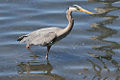
Great Blue Heron
(Ardea herodias)
Order: Ciconiiformes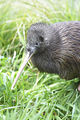
Kiwi
(Apteryx mantelli)
Order: Struthioniformes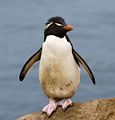
Rockhopper Penguins
(Eudyptes chrysocome)
Order: Sphenisciformes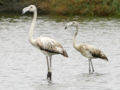
Greater Flamingo
(Phoenicopterus ruber roseus)
Order: Phoenicopteriformes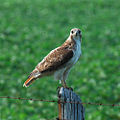
Red-tailed hawk
(Buteo jamaicensis)
Order: Falconiformes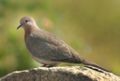
Laughing Dove
(Streptopelia senegalensis)
Order: Columbiformes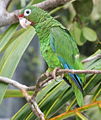
Puerto Rican parrot
(Amazona vittata)
Order: Psittaciformes
Common Barn Owl
(Tyto alba)
Order: Strigiformes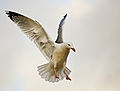
European herring gull
(Larus argentatus)
Order: Ciconiiformes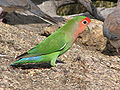
Peach-faced Lovebird
(Agapornis roseicollis)
Order: Psittaciformes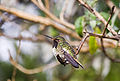
Volcano Hummingbird
(Selasphorus flammula torridus Salvin)
Order: Apodiformes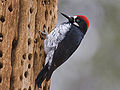
Acorn woodpecker
(Melanerpes formicivorus)
Order: Piciformes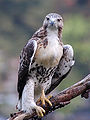
Red-tailed Hawk
(Buteo jamaicensis)
Order: Falconiformes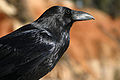
Northern raven
(Corvus corax)
Order: Passeriformes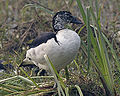
Comb Duck
(Sarkidiornis melanotos)
Order: Anseriformes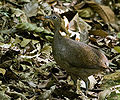
Great Tinamou
(Tinamus major)
Order: Tinamiformes


Birds
References
- ↑ Sarfati, Jonathan. Refuting Evolution 2. Greenforest AR: Master Books, 2002. (p66)
- ↑ Dyke, Gareth. Winged Victory: Modern Birds Now Found to Have Been Contemporaries of Dinosaurs ' 'Scientific American, Published July 2010.
- ↑ Science 2.0 (2009, June 9). "Theropod Dinosaurs Evolved Into Birds? Not Likely, Says Study."
- Porch, Thomas, Biology, Greenville,South Carolina: BJU Press, 2005
- Avian Reproduction: Anatomy & the Bird Egg Gary Ritchison. People.Eku.Edu.
- Eggshell Wikimedia Foundation, Inc. Wikipedia.
- COMMUNITIES AND ECOLOGY ©Ornithology.com. Ornithology.
- Birds and Humans Answers Corporation. Answers.com.
External links
- Birds of the Presidio National Park Service
- Class Aves Unversity of Michigan
- Ave slide show Evansville.edu
- Aves images by Wikimedia Commons
- Introduction to Aves by Ben Waggoner
- Online Field Guide to Birds Biodiversity Institute
- The Feather Atlas U.S. Fish and Wildlife Service Forensics Lab. High-resolution scans of flight feathers of major groups of North American birds as an aid to species identification.
- Birds of the Bible Lee's Birdwatching Adventures Plus
- Creation Birding


