Casluhim
The Casluhim (Hebrew: כסלחים, Kaslūkhīm) are the descendants of ancient Egyptian Casluh (Hebrew: כסלח, Kaslūkh or Kasluch; "Name means::fortified"), the sixth son of son of::Mizraim according to the Genesis 10:14 . The Egyptian form of their name is preserved in the inscriptions of the Temple of Kom Ombo as the region name Kasluḥet.[1] Tradition preserved by Saadia Gaon placed the land of the Casluhim in the northern Sa'id region (not to be confused with Port Said).[2] In the Aramaic Targums their region is called Pentpolitai understood to be derived from the Greek Pentapolis (in North Africa) which more precisely locates the area as the northwest.[2] Another name for their region is Pekosim used in Bereshit Rabbah 37.[2] In ancient times, they were descended from one of the brethren who inspired the Greek legends about the titans while in more recent times, Casluh was the inspiration behind H.P.Lovecraft's Cthulhu due to associations with Oceanus.
Descendants
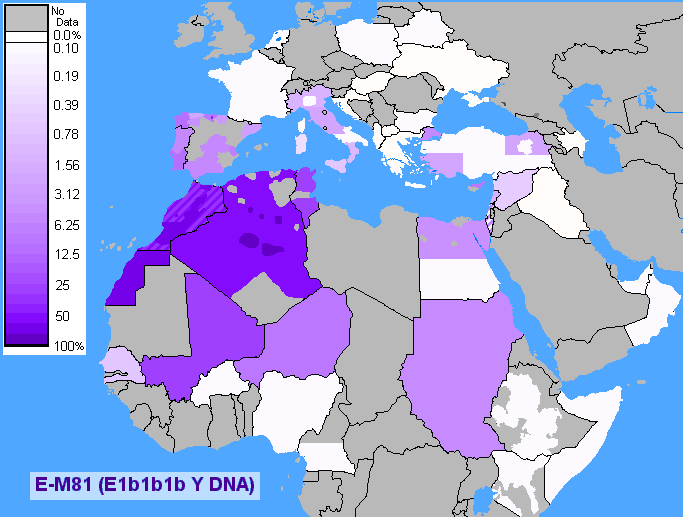
Y-DNA Haplogroup E-Z830. Ašəlḥi. Hebrew traditions record that "Poseidon's Cretan-Bull" Philistines associated with great stature came as a result of Casluhite women (i.e. the serpentine Avvites according to Talmud Chullin 60b) originally given to Caphtor being taken by the Pathrusim. The proto-Philistine Avvites are described as Gibborim in the Midrash Rabbah on Genesis 37:5 and in 26:7 relating them to the Emim, Zamzumim and other Anakites including הנפילים (from the Haplogroup A נפלים -Numbers 13:33) who ruled over Canaan's Amorites along with other Rephaim like Horites (over the Hivites) as well as the Zamzumim. It seems they may have used a Serpentine or dragon totem associated with the black giant Oceanus. In the New Chronology their Y-DNA Haplogroup E-M123 Anakite branch is related to Anactoria and the Inachids (Anakites) from whom Io (Awim) and other Pelasgians (Philistim) came forth to populate the lands associated in Greeks myth with the Titans (Biblical Gibborim), the Atlas mountains, Ethiopia, the Balkan peninsula and beyond. Some cite Crete as their possible point of expansion, which, if true, would make the Ethiopic War of Josephus a truly international conflict as he records the destruction of the Casluhim in that War. This, however, only serves to make Crete a most likely place for their settlement, the northern areas of Egypt being a far more reasonable proposition. The early so-called "lesser" Hyksos Awites associated with the white Apis bull along with other Pelastians (former Philistines) under the Anakites (Anactorians/Inachids) began to appear in Egypt during the 11th dynasty. These Awites eventually expelled related Greater Hyksos Shemau Shosu among them at the end of the 17th dynasty.
The Philistines were known to the Assyrians as the Palashtu, and to the Greeks as `he Palaistine' - hence the later name of Palestine. After the Assyrian conquest of the 8th Century BC, however, the Philistines effectively disappear as a coherent nation. It is currently being taught that the Philistines did not appear until the 13th Century BC, and that they are to be identified as the 'Sea Peoples' of Egyptian literature.
Some Berbers may be derived from the Philistines. Certain African histories describe Goliath, a Philistine, as "Goliath the Berber" because many of these tribes claim descent from Jalut (the Goliath of the Bible). [3] However, they resent being called Berber, preferring the appellation of Amazigh or Chleuhs - 'The Free People'. The Berbers appear to have varied origins. Though they occupy the land of Phut, the son of Ham they appear to have some elements from Casluh Caphtor, Pathrusim, and other sons of Mizraim. The Kabyle Berbers in particular appear to be descendants of the Lydians.
See Also
 Browse |
References
- ↑ Archibald Henry Sayce, The "Higher Criticism" and the Verdict of the Monuments, 2009, General Books LLC, isbn=9781150178856, page=91 http://books.google.com/books?id=Z-AsTCT0zOsC accessdate: 28 November 2010
- ↑ 2.0 2.1 2.2 Navigating the Bible, World ORT, 2000, commentary Casluhim
- ↑ Tribe and Society in Rural Morocco, which discusses the role of Goliath in Moroccan Berber genealogies.
External Links
- Distribution Map
- In Search of ... the Origin of Nations by C.M. White. History Research Projects 2003.
| |||||||||||||||||||||||