Hydrangea
| Hydrangea |
|---|

|
| Scientific Classification |
|
| Species |
|
 |
| H. macropylla (bigleaf hydrangea) |
Hydrangea is a taxonomic genus of flowering plants made up of about one hundred species of perennial shrubs. They are indigenous to Asia and the Americas. They come in many different varieties: most shrubs are five to fifteen feet, but others are small trees. There is even a species that climb trees and can climb to the height of about one hundred feet! Some species such as H. paniculata can survive very cold temperatures while other species will not survive under the same conditions. The species H. macrophylla is the most common species. All hydrangea flower buds are slightly poisonous, so it would be best not to eat them.[3]
Body Design

This genus is full of rare plants that store aluminum, which is released from acidic soil. The pH factor of the soil establishes the color of the hydrangea, whether it be lavender, red, pink, or various shades of blue. If the soil is extreme in acidity, it will absorb the aluminum to produce blue flowers; in alkaline soils, aluminum cannot be accumulated, and so the flowers turn pink or purple. Neutral soils produce paler colored petals. Hydrangea growers can choose varieties of colors by regulating the pH of the soil. [4] Hydrangeas have strong, woody stems at their base but their strength converges to fleshy and flexible near the beginning of the flower stalks. [5]
The flowers, commonly called hortensias, on a hydrangea shrub are found in immediate bunches at the tips of the stems. The individual flowers are particularly small, but are clustered very close to each other which causes the illusion of thinking that one bundle is one flower. Rather, one bundle is made up of small flowers grouped together.[6] Most shrubs are one to three yards tall but a few exceptions can be the vining hydrangeas that can reach up to ninety-eight feet by twisting around trees. Though most are deciduous, they can also be evergreen. There are three different types of flower heads. The first is called a Mophead. The most common bloom is when the flowers are grouped together in a round, globe-like cluster. Panicle flower heads are long and slightly pyramid-shaped and are found mostly in Oakleaf hydrangeas. Lacecaps are the last of the flower blooms. They are found as small flat bunches made up of tiny, immature buds that are enclosed by four or five petals.[4]
Hydrangeas by the common names of Bigleaf hydrangeas, Garden hydrangeas, and Endless Summer hydrangeas are known by the species name H. macrophylla. They are the most common hydrangea species. Their flowers, roots, and leaves are antimalarial, which means they are designed to prevent or remedy malaria. They are also used to relieve a cough and to increase the amount of water and salt expelled from the body as urine, which is described as being diuretic. The Oakleaf hydrangea and the Snow Queen hydrangea are grouped into H. quercifolia. [7]Their fall colors come in a range of many colors, from red to a purplish magenta. For decorating purposes, they can be used to serve as an untrimmed hedge. The Smooth hydrangeas are in the species H. arborescens. They are nicknamed "snowballs" and can survive colder temperatures. These shrubs' flowers are sweetly scented and can be made into candles. Climbing hydrangeas belong to the species H. anomala petiolaris. These vines can grow up trees and bloom from late June to early July. Their leaves are lacey and creamy with shiny green leaves. Their leaves can be boiled into a syrup and then the sweet sap from the hydrangea can be used as a drink. The Peegee hydrangea in the species H. paniculata has cone-shaped flower heads and can be up to ten to fifteen feet tall. This type of hydrangea is the most cold hardy of all the other plants in the genus, which contains approximately one hundred different species. [8]
Life Cycle

Hydrangeas reproduce sexually and they can yield flowers and blossoms from early spring or midsummer to late autumn. The flowers grow in flowerheads that contain two types of flowers. The first type is found in the interior of the flowerhead and is small and fertile. The second type is large, flashy, and sterile and found in a ring around the outermost part of each flowerhead. It is accompanied by colorful sepals. [9]The beginning of new life starts when their pollen is dispersed by the wind. Hydrangeas can live up to forty to fifty years if they are cared for properly. The smooth hydrangea (H. arborescens) blooms longer than all of the other hydrangeas, often displaying color from early June through September, and need much pruning. Panicle hydrangeas (H. paniculata) start a bit later than the smooth hydrangeas, blooming during the summer heat and into the autumn months. Usually, their flowers are white at the first blossoming and begin to shift to a pinkish toward the fall. They might skip a blooming season or two from transplantation, but that does not indicate that it will never bloom again. With care, their roots will grow and adapt to the new location, and flowers will soon bloom again.[10]
Ecology

Hydrangeas are shrubs that are native to southern and eastern Asia, such as Japan, China, and Indonesia, where they are smaller in structure and have smaller leaves. They also originate from Korea and the Himalayas. They have also come from North and South America.
They prosper the most in slightly shaded areas such as the southeast United States but can survive the full-on sun. They prefer having bright sun in the morning hours and then slight shadiness in the afternoon hours. Hydrangeas can tolerate almost every type of soil, even hard, dry, or rocky soils, although most hydrangeas thrive in rich and moist soils that have a lot of organic matter in it. If the soils are plagued by dryness or drought, the leaves will wilt, and the hydrangea shrub will most likely not thrive. They also cannot bear the severe cold. [11]
Hydrangea Gardening

Although hydrangeas are found in the wild, they are greatly appreciated for their beauty, and so are found in numerous gardens or back yards. There are ways to help them thrive in your own back yard. To import one of these shrubs into the soil, make sure the spot is not overly exposed to the sun. Make the whole about two feet long across and one foot down. Do not let your hydrangea shrub get dehydrated because their leaves will wilt. Pruning is fundamental for a hydrangea's growth because new flowers develop on the previous year's growth. This trimming should be done as soon as the flowering season is done. If you fail to prune, the hydrangea will not produce any blooms for the next growing season. In a harsh cold, they should be covered. Keep any pets away from these plants as they are slightly toxic. [8]
Identifying the Hydrangea
Gallery
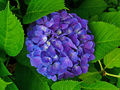
Bigleaf hydrangea
(H. macrophylla )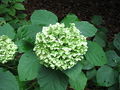
Smooth hydrangea
(H. arborescens)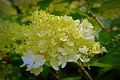
Panicle hydrangea
(H. paniculata)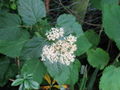
Nettle-leaved hydrangea
(H. Hirta)


References
- ↑ Hydrangea L. United States Deparatment of Agriculture. Web. Acessed January 29, 2018. Unknown Author.
- ↑ Hydrangea Wiki Species. Web. Last modified April 8, 2017. Unknown author.
- ↑ 13 Facts Every Hydrangea Enthusiast Needs To Know Town & Country. Web. Accessed January 24, 2018. Author Unknown.
- ↑ 4.0 4.1 Hydrangea Gifting Inc.. Web. Last modified January 30, 2018. Unknown author.
- ↑ Johnston, Brian A Close-up View of the Hydrangea Micscape. Web. Accessed January 18, 2018.
- ↑ Types of Hydrangeas Plant Addicts. Web. Accessed January 31, 2018. Author unknown.
- ↑ Hydrangea Questions and Answers The United States National Arboretum. Web. Last modified September 28, 2005. Author Unknown.
- ↑ 8.0 8.1 Fresh, FTD. Types of Hydrangeas: A Visual Guide FTD. Web. Published July 11, 2016
- ↑ Elpel, Thomas. Plants of the Hydrangea Family Thomas J. Elpel. Web. Accessed January 22, 2018.
- ↑ The Duration of Hydrangeas SFGate. Web. Accessed January 22, 2018. Author Unknown.
- ↑ Hydrangea How to Plant, Grow, and Care for Hydrangea Shrubs Yankee Publishing Inc.. Web. Last modified November 20, 2017. Unknown author.


