Decapod
| Decapod |
|---|

|
| Scientific Classification |
|
| Families |
 |
| Full Range map of Decapods |
Decapods are a diverse taxonomic order of the subphylum Crustacea, and most commonly known members include crab, shrimp, and lobsters. All decapods possess five pairs of walking legs, as the name implies, but each species uses them in unique ways, suited for that individual's purposes. There are approximately 15,000 known species of decapods and more still are being discovered.
Body Design

Decapods, being members of the subphylum Crustacea, have a jointed exoskeleton, two pairs of antennae, a pair of mandibles, a pair of compound eyes, a pair of maxillae on the head, a body split into three major segments, and breathe through gills. Additionally, all arthropods have metameric segmentation, though many arthropods have widely specific and variable segments.[2]Decapods are a diverse group, some shrimp species ranging in size from under to half a centimeter to the coconut crab, which can reach lengths of 6 ft, and weigh up to 38 pounds. [3]As their name implies, Decapods have 5 pairs of jointed walking legs on their abdomen body section, which is the defining characteristic of this class. Additionally, the first three segments of the thorax and the head are fused together and make up the cephalothorax.[4]
The Decapod's body is divided into 21 segments, called metameres, and are numbered from front to back, with 1 being the anterior most section. These segments are grouped into three body divisions: the head, thorax, and abdomen, and each of these segments possesses a pair of limbs, with the exception of the first and last metameres. The abdomen section is composed of the seven posterior body segments and has the five pairs of walking legs, called pleopods, in addition to the fin-like uropods on metamere 20. The thorax, which is made up of the eight middle segments, has five pairs of pereopods, which are generally used for swimming, and three pairs of maxillipeds, which are located just behind the head and are used to aid in the consumption of food. The chelipeds of many decapods are fashioned into claws to aid in capturing food. The head section of Decapods is composed of six metameres, with the frontmost segment having a pair of compound eyes. Additionally, the head has a pair of antennules, antennae, mandibles, maxillules, and maxillae. Strangely, some decapods have a total of up to thirty-eight limbs, contrary to their name. However, only the five pairs of pleopods on the abdomen section are used for walking, which is where they derive their name.[5] Decapods all possess a limited amount of regeneration, in their chelipeds and maxillae especially. [6]Most species however, such as the blue king crab, cannot fully regenerate lost limbs, and most grow up to only less than half of their original length. [7]
Life Cycle

The life cycles of Decapods vary greatly, as nearly 15,000 different species belong to this subphylum. A large majority of decapods live in the water, but there are some terrestrial species. Of those that live underwater, most spend their lives in marine environments (salt water), but there are also those that live in freshwater. While most species of decapods scavenge for food, eating detritus and wastes in the water. Some crabs will also feed on decaying vegetation or even prey on live animals like mussels. [8]
The shrimp's life cycle is completed in eight stages. First, the shrimp's eggs are laid in an estuary and sink to the bottom, before hatching as a nauplius, which is just slightly larger than its egg and has the ability to swim. Next the shrimp becomes a protozoea, which are considered plankton, and grow mouth parts, before developing antennae as a Mysis. In the Post larval state, the shrimp's activity increases greatly as the flood tides increase. Juvenile shrimp grow at an extremely quick rate, reaching almost full size in under a month on average. The Juvenile becomes a Sub-adult as the growing process slows and have no reproductive capability at this point. Finally, as adults, the shrimp moves out into the ocean from the estuary and begins spawning and reproducing. [9]
The crab's life cycle is accomplished in three states. After a female's thousands of eggs are fertilized by a male, the mother moves into the water to give birth to zoea, which are microscopic crab larvae. In this state, the zoea can swim about freely and eat small organisms and feed off of nutrients in the water. After a zoea matures, the crab larvae turns into a megalopa, a state which resembles an adult, but has a tail that protrudes from the posterior of the crab.[10] From this point, the crab molts frequently and grow to be full size, the rate of maturity varying among different species. Once a crab reaches adulthood, gender specific characteristics begin to develop and create a distinct difference between sexes.[11]
Ecology
Decapods, having a wide variety of nearly 15,000 species, impact the ecosystems in many ways, but since most decapods are marine, most ocean ecosystems are effected.[12] Common species such as shrimp are food for many predators, including many fish, birds, and even insects.[13] In the early stages of life, shrimp and krill are common food for filter feeders such as whales. Other species such as crab are generally detritivores and will scour the ocean floor for dead material. Odd species such as the Pea Crab live within the shells of other sea creatures and are speculated to be a parasitic species. [12]
Additionally, many decapods such as crab, lobster, and shrimp, are food for humans as well. In 2012, Alaskan harvests alone amassed over 100 million pounds of crab, but at the height of the industry, over 400 million pounds of Alaskan crab alone were caught. Fisheries in Alaska processed over 200 million pounds of crab. Shrimp, a commonly consumed decapod, brought in just under 5 million dollars in 2012 for Alaska.[14]
Diversity

Being the largest Order of Subphylum Crustacea, Decapods are a vast and varied division of animals. The smallest known decapod is the Pea Crab (Pinnotheres pisum), measuring under a third of an inch at the least. As mentioned previously, these species are considered parasitic and live inside the shells of mollusks, such as clams and oysters for their oxygen and nourishment. The coconut crab (Birgus latro), is a terrestrial decapod, and has to keep its gills moist by transferring water onto its gills. The large crab is capable of climbing trees and other surfaces to obtain food, especially coconuts, which is where the name is derived from.[3] These crabs prefer to eat fruit varieties, but are also capable of eating detritus and small creatures are they are omnivorous.[15] The crab with the longest legs is the Japanese Spider Crab, with a leg span up to 12 feet wide. The crab resides on the bottom of the seabed around Japan and being omnivorous, feeds on various plant material and small animals. The crab is very hard to catch because they prefer to live in sea trenches of depths up to 2000 ft below, and are considered a delicacy to eat in Asian countries. [16]
Shrimp species are fairly uniform in body and dietary habits, but the color varieties and patterns are widely different and come in almost every design imaginable. Species such as the Fire shrimp (Lysmata debilius) and the Cardinal Shrimp (Caridina dennerli) are brilliant and vibrant shades of red, while the American Ghost Shrimp is almost completely transparent. Oddly structured shrimp species include the Horseshoe Shrimp, which resembles a Horseshoe Crab, has a rounded, flat carapace with its long segmented body protruding from the end.[17]
Video
This short video highlights the Dresser crab, Naxia Tumida, an unusual crab with the ability to camouflage itself in any environment. This crab uses its unique ability to avoid detection by predators, and well demonstrates the variety of species within the Order Decapoda.
Gallery
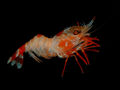
Armed Nylon shrimp
(Heterocarpus ensifer)
Family: Pandalidae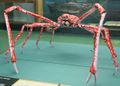
Japanese Spider crab
(Macrocheira kaempferi)
Family: Inachidae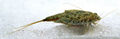
Horseshoe Shrimp
(Triops cancriformis)
Family: Triopsidae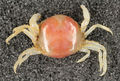
Pea Crab
(Pinnotheres pisum)
Family: Pinnotheridae


References
- ↑ Decapoda Wikispecies. Web. Last updated 29 September 2013.
- ↑ Myers, Phil. [animaldiversity.ummz.umich.edu/accounts/Crustacea/ Crustacea] Animal Diversity Web. Web. Accessed December 15, 2013.
- ↑ 3.0 3.1 Preuss, Simone. The Largest Crab on Earth Environmental graffiti. Web. Last accessed on 13 January 2014.
- ↑ Fox, Richard. [lanwebs.lander.edu/faculty/rsfox/invertebrates/callinectes.html Blue Crab with notes on Cancer] Invertebrate Anatomy Online. Web. Published 30 May 2007.
- ↑ Characters_and_Anatomy. Palaeobiology and Biodiversity Research Group. Web. Accessed on 15 December 2013.
- ↑ Crabs of Japan. Marine Species Identification Portal. Web. Accessed on 15 December 2013.
- ↑ Autonomy and regernation of limbs in the male blue king crab Paralithodes platypus from the Bering Sea and the Sea of Okhotsk Springer Link. Web. Published 1 September 2000.
- ↑ Angel and Clare. Crab Diet Rockburn. Web. Published during the 2001-2002 school year.
- ↑ Whitaker, David. Shrimp Life Cycle Department of Natural Resources, South Carolina. Web. Last Accessed 13 January 2014.
- ↑ Crab Zoea Larvae AquaScope. Web. Last Accessed 14 January 2014. Author Unknown
- ↑ Life Cycle Fiddler Crabs. Web. Last Accessed 14 January 2014.
- ↑ 12.0 12.1 Malacostraca - Decapods Marine Education Society of Australia. Web. Last Accessed 13 January 2014. Author Unknown.
- ↑ What Eats Shrimp? What Eats?. Web. Published April 6, 2010. Author Unknown.
- ↑ Shellfish Commercial Fisheries Alaska Department of Fish and Game. Web. Last Accessed on 13 January 2014. Author Unknown.
- ↑ Coconut crab (Birgus latro). ARKive. Web. Last Accessed on January 13, 2014. Author Unknown.
- ↑ Japanese Spider Crab. Cold Water Quest. Web. Last Accessed on January 13, 2014. Author Unknown.
- ↑ World's Most Beautiful, Colorful and Unique Shrimps. ABC's of Animal World. Web. Published 17 December 2011. Author Unknown.


