Fuchsia
| Fuchsia |
|---|

|
| Scientific Classification |
|
| Species |
|
The genus Fuchsia is a group of flowering plants under the family Onagraceae. They were first recorded in the late 16th century by the Germans in 1501-1566. Most Fuchsias are shrubs, but there are some varieties that grow as trees. An interesting note is that the common name in English, Fuchsia, is also the scientific name.
Anatomy

Most Fuchsias are short shrubs. They rarely grow more than 10 feet tall. The average height of a Fuchsia plant is around 4 feet tall around.
There are a few unique exceptions to the height rule. One of them is the Kotukutuku in New Zealand. These Fuchsia plants actually grow as trees, some reaching over 45 feet tall, but the average being only 38.
Reproduction
The most noticeable thing about Fuchsias are the beautiful flowers it produces. They have a unique teardrop shape that has a very hot appeal. Fuchsias make flowers throughout summer and autumn in extreme amounts. In some tropical species they are made year round. the range of colors is vast among the flowers, including all shades of red and pink, purple, blue, and orange. The reason for these bright colors is that hummingbirds are drawn to the colorful flowers, and end up spreading the plants pollen around.
A less common color found among the flowers is yellow. Scientists do not know exactly why this is, but it might be that hummingbirds can not see yellow as easily.
Ecology
Most native Fuchsia are found in South America. There are some native plants found in throughout Central America and into Mexico. Some species are also found on New Zealand and Tahiti.
Gallery
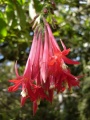
Fuchsia boliviana
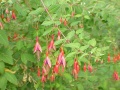
Fuchsia magellanica

Fuchsia regia
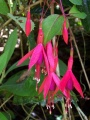
regia blossom
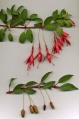
Fuchsia magellanica
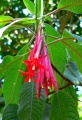
Fuchsia boliviana

Fuchsia flower

Fuchsia boliviana


Related References
- Fuchias
- fuchia nursery fuchia
- Fuchia wikipedia


